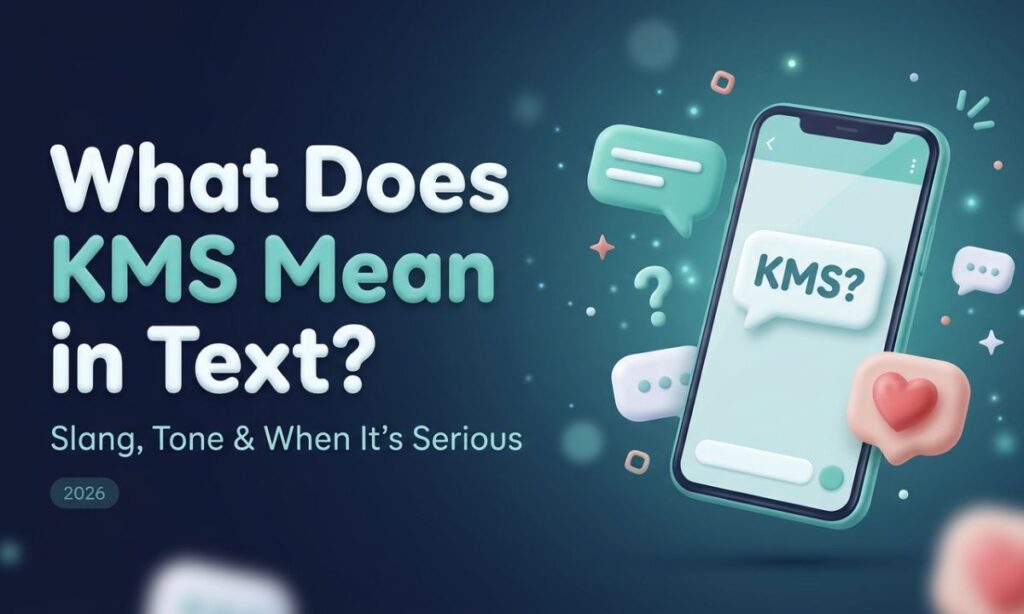
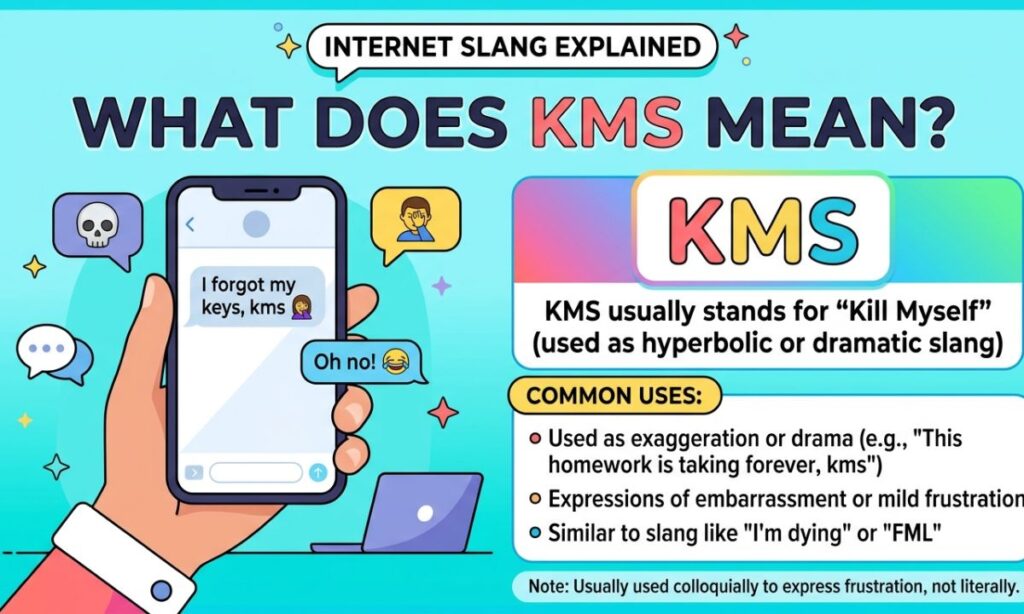
In texting, KMS usually stands for “kill myself.” Most of the time it’s an exaggerated, dramatic way to say you’re embarrassed, frustrated, or overwhelmed. It’s a figure of speech rather than a literal statement, similar to saying “I’m dying” after a funny video.
Because of the words behind it, tone and context matter more here than with almost any other slang. The same three letters can be a throwaway joke from a friend or a sign that someone is struggling. Knowing how to tell the difference helps you respond well.
This guide covers what KMS means, where people use it, real examples, when it’s serious, and what to say back. You’ll also find a few non-slang meanings and where to get help if you or someone you know needs it.
What Does KMS Mean in Text?
KMS Stands for “Kill Myself”
As slang, KMS is shorthand for “kill myself.” It’s typically typed in lowercase (“kms”) and tacked onto a sentence about something annoying, awkward, or stressful.
Simple Meaning in Plain English
In most casual use, “kms” means “this is so embarrassing, frustrating, or overwhelming that I’m being extra dramatic about it.” It’s hyperbole, not a plan or a statement of intent.
That said, the phrase is still about harming oneself, which is why it can’t always be brushed off. The letters alone don’t tell you how someone really feels.
Where Is KMS Used?
Text Messages and Group Chats
KMS shows up most often in private chats and group threads, where friends already know each other’s humor and tone. It usually appears right after a frustrating or embarrassing moment.
TikTok and Other Social Media
On TikTok, Instagram, and Snapchat, you’ll see KMS in comments, captions, and replies. Creators and viewers use it to react to cringe moments, awkward videos, or relatable stress.
Gen Z and Younger Users
KMS is commonly associated with Gen Z and younger internet users, who often use dark or exaggerated humor online. Older readers may be surprised by how casually the phrase appears, which is one reason it gets misread.
Why Do People Use KMS?
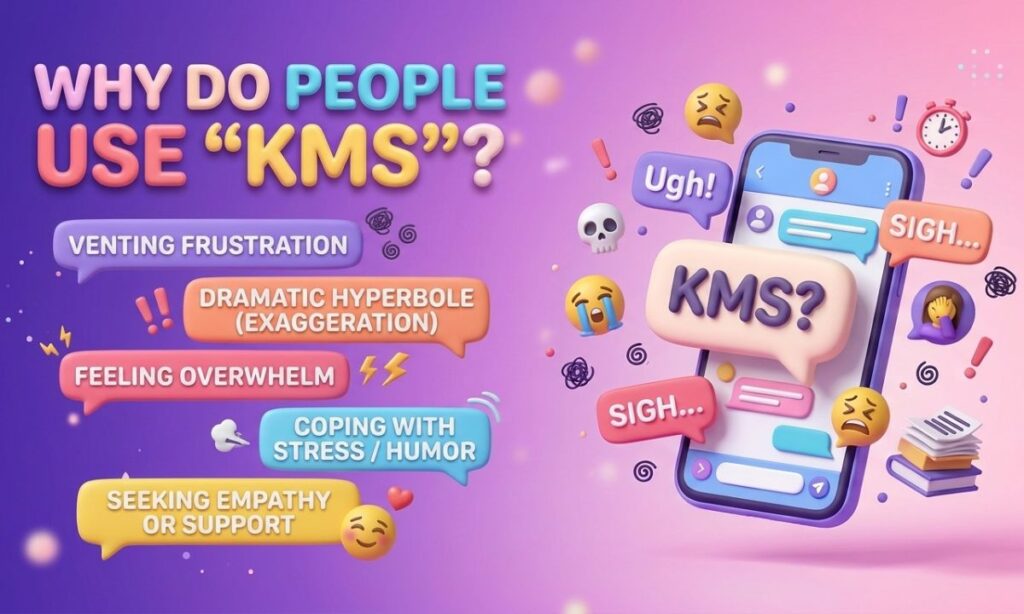
To Express Embarrassment
People type it after an awkward moment: “I called my teacher ‘mom’ in front of everyone, kms.”
To Show Frustration
It can stand in for “I’m so annoyed.” Example: “Lost my homework again, kms.”
To Be Dramatic
Sometimes it’s simply exaggeration for effect, often with laughing or crying emojis.
To React to Bad Luck
When something goes wrong, KMS works as a quick, overstated groan: “My phone died right before the call, kms.”
Real-Life Examples of KMS in Text
Example 1: Embarrassment
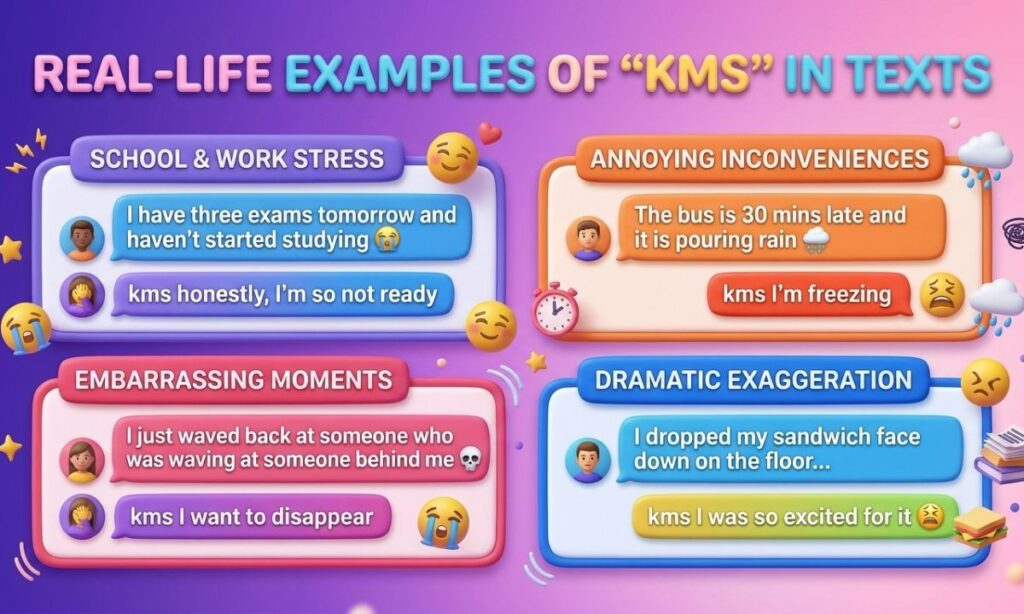
- Text: “I waved back at someone who wasn’t waving at me. kms”
- Meaning: “That was so embarrassing.”
Example 2: Frustration
- Text: “Three hours on this assignment and it still won’t submit, kms.”
- Meaning: “I’m very frustrated.”
Example 3: Bad Luck
- Text: “Missed my bus by like two seconds kms.”
- Meaning: “Ugh, terrible timing.”
Example 4: Playful Drama
- Text: “They canceled the finale episode?? kms 😭”
- Meaning: “I’m dramatically upset about a TV show.”
Example 5: A Message That Needs Attention
- Text: “I don’t think I can do this anymore. kms.”
- Meaning: Here, the hopeless wording matters more than the slang. This one deserves a real check-in.
When KMS Can Be Serious
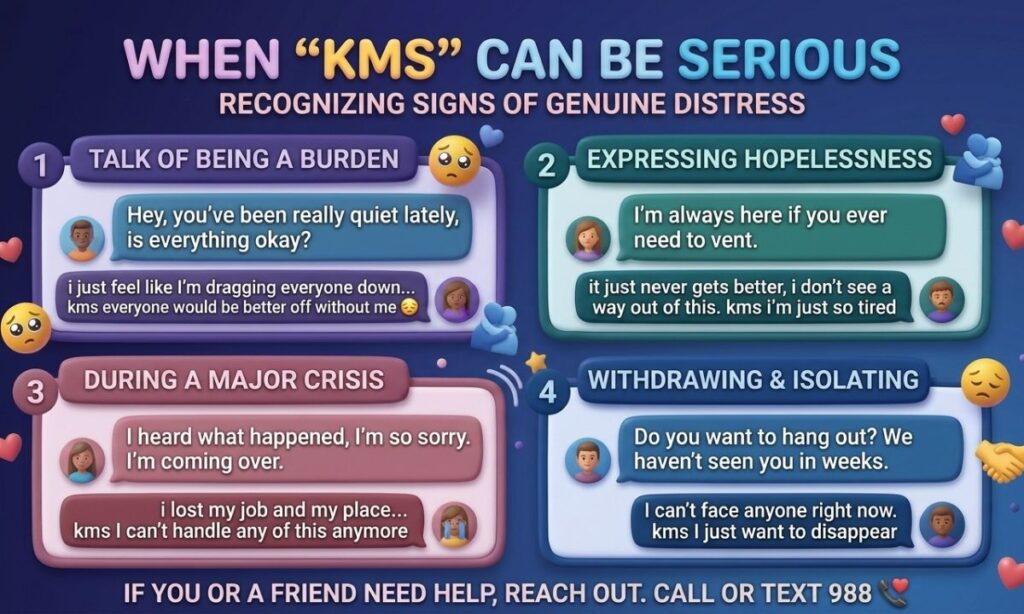
Signs a Message May Be More Than a Joke
Look at what surrounds the letters. A message deserves more attention when it comes with:
- Expressions of hopelessness or feeling like a burden
- Talk of having no reason to go on
- Saying goodbye or giving away things
- Pulling away from friends or sudden changes in mood
- Any mention of a plan or a way to hurt oneself
If you see signs like these, take the message seriously even if it ends with “lol.”
What to Do If You’re Worried About Someone
- Ask directly and calmly. Something like “That sounded heavy. Are you okay?” shows you noticed.
- Listen without judging. You don’t have to fix everything. Letting them talk matters.
- Don’t dismiss it. Replies like “you’re being dramatic” can shut the conversation down.
- Encourage support. Suggest talking to a trusted adult, a counselor, or a mental health professional.
- Get help right away if there’s immediate danger. In the U.S., call 911.
If You’re the One Feeling This Way
If you’ve typed KMS and it wasn’t really a joke, you deserve support. In the U.S., you can call or text 988, the Suicide & Crisis Lifeline, at any time. You can also text HOME to 741741 to reach the Crisis Text Line. Talking to someone you trust is a good step too.
KMS in a Text From a Boy or a Girl
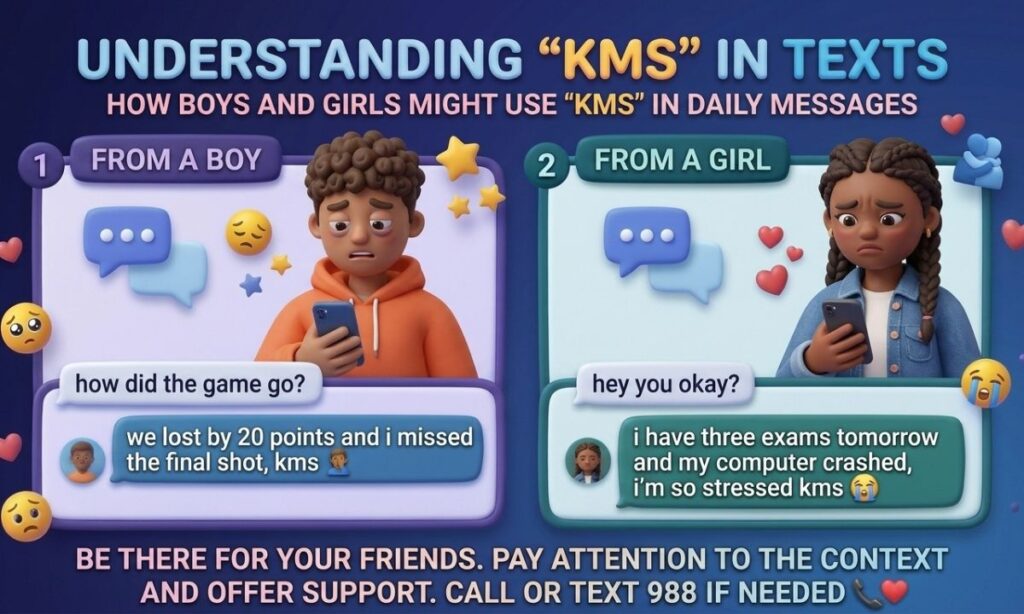
Who sends it doesn’t change the meaning. A text from a guy or a girl saying “kms” is read the same way: usually exaggerated frustration, occasionally a real cry for help.
What matters is the relationship and the conversation. If it’s a friend who jokes this way all the time about small things, it’s probably casual. If it’s out of character, or follows a rough period, it’s worth gently asking how they’re doing.
KMS vs. Similar Texting Slang
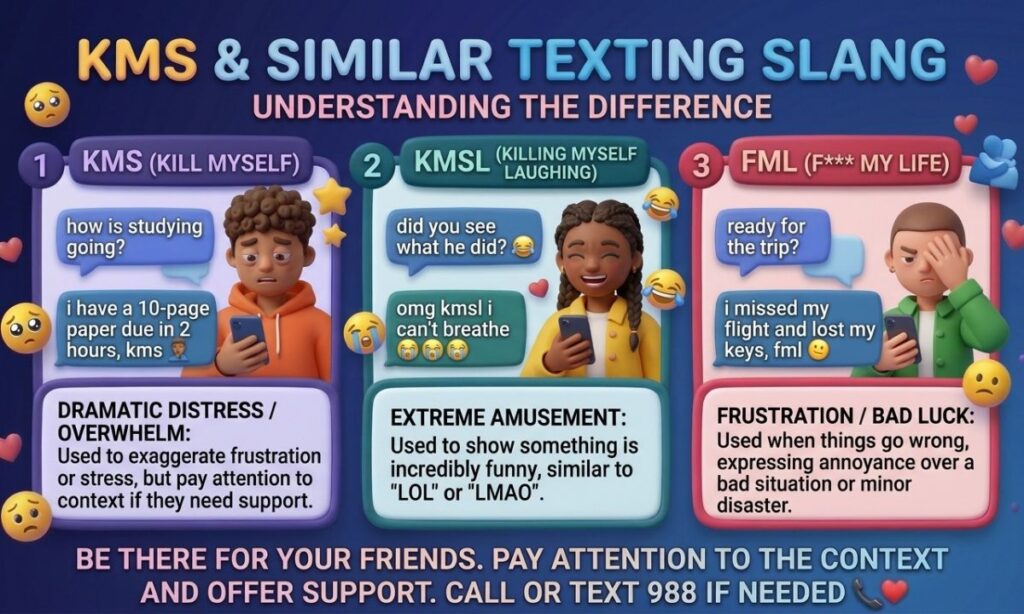
- “I’m dead” / “I’m dying”: usually about laughing or being embarrassed, and generally lighter.
- “I’m done”: signals giving up on a task or being fed up, without the self-harm wording.
- “I can’t”: expresses being overwhelmed, with no dramatic phrasing.
- KYS: stands for “kill yourself” and is aimed at another person. It’s hostile and harmful, not a joke about your own mood, and it’s very different from KMS.
KMS is about the speaker. KYS targets someone else, and that difference matters a lot.
Is KMS Offensive?
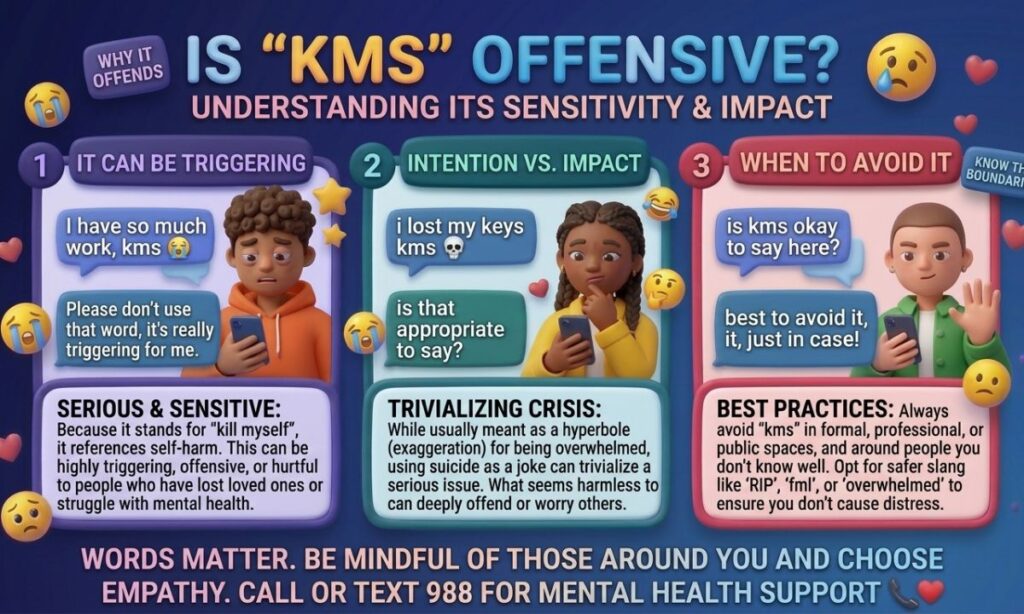
It can be. Many people find it upsetting, especially those who have lost someone to suicide or have struggled themselves. Even when it’s meant as a joke, the phrase can land badly.
That’s why context matters. Among close friends who share the same humor it may pass without comment, but in school, work, or with people you don’t know well, it’s more likely to cause discomfort.
Better Alternatives to KMS
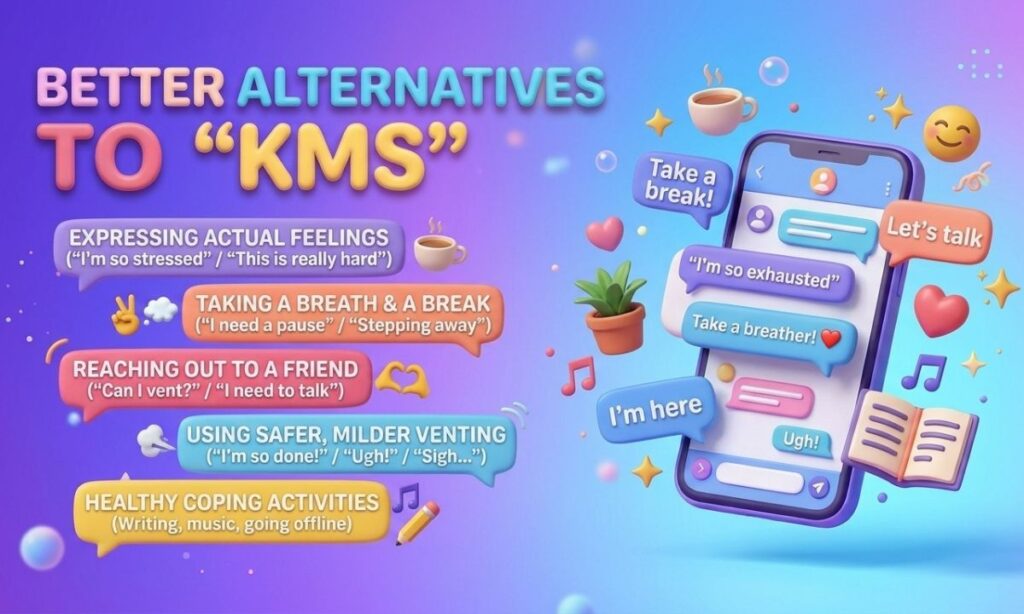
If you want to express the same feeling without the heavy wording, try:
- “I’m so embarrassed.”
- “I can’t deal with this right now.”
- “This is the worst.”
- “I’m mortified.”
- “I’m so stressed.”
- “Ugh, I’m losing it.”
These get your point across and avoid worrying anyone who sees the message.
Other Meanings of KMS
Does KMS Mean Speed?
Not really. In a non-slang sense, “kms” is the plural of kilometers, a unit of distance, as in “I drove 20 kms.” Speed is usually written as km/h or kph (kilometers per hour).
KMS in Tech
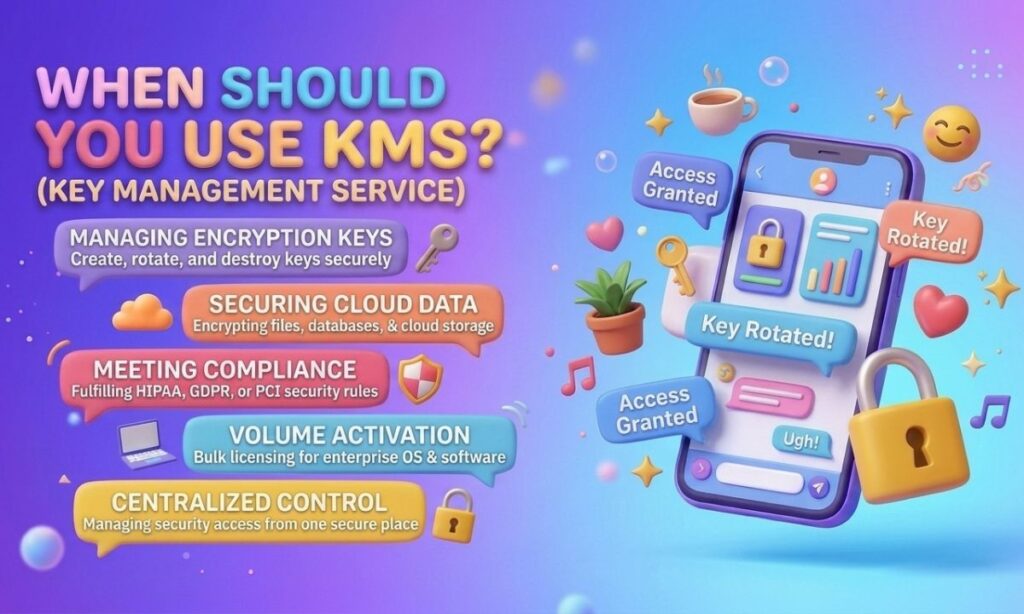
In computing, KMS often stands for Key Management Service or key management system, which relates to handling activation or encryption keys. This appears in IT and software contexts, not in casual texting.
When Should You Use KMS?
It May Be Understood Among Close Friends If:
- You all share the same humor and know it’s exaggeration
- It’s a private chat, not a public post
- The topic is minor, like an awkward moment or a small mistake
You Should Avoid Using It When:
- You’re talking to someone you don’t know well
- You’re in school, work, or a professional setting
- Someone in the conversation is going through a hard time
- You actually feel low, because a clearer message will get you better support
Common Misunderstandings About KMS
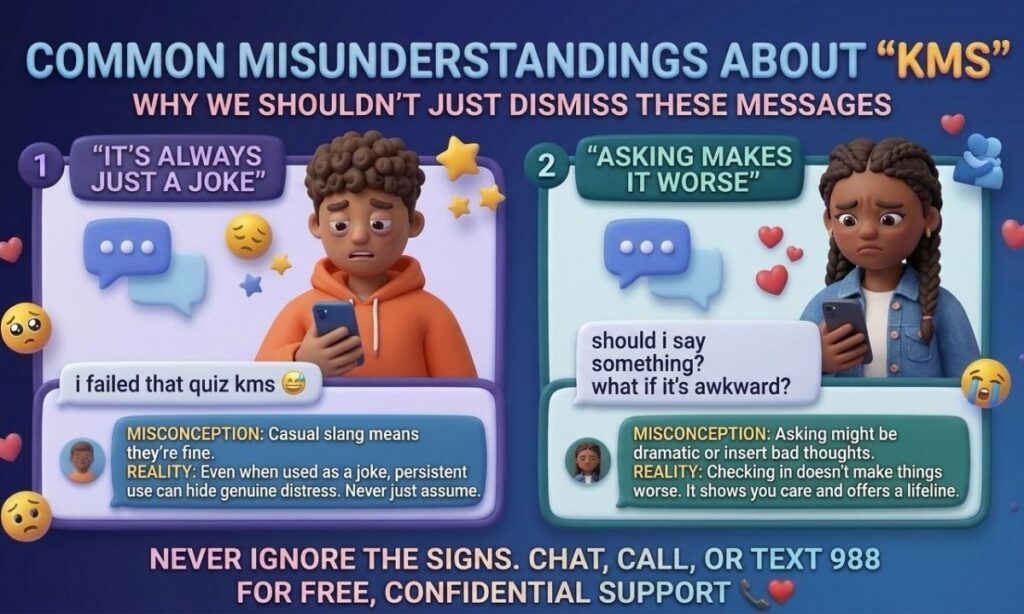
Myth 1: KMS Always Means Someone Wants to Die
Usually it doesn’t. Most uses are exaggerated reactions to everyday stress. But that doesn’t mean it should never be checked on.
Myth 2: It’s Always a Joke
Also not true. For some people, a casual tone hides real pain, so watch for context and changes in behavior.
Myth 3: Everyone Understands It
Not everyone knows the slang, and some people read it literally. Parents, coworkers, and older relatives may react with alarm.
Myth 4: It’s Safe Everywhere
Some apps, schools, and workplaces flag or take reports of this kind of language seriously. What’s fine in a private chat may not be elsewhere.
Pro Tips for Understanding KMS
- Read the whole message, not just the letters.
- Consider who’s sending it and how they usually talk.
- Notice emojis, punctuation, and timing. A crying-laughing emoji after a silly mistake reads differently from a bare “kms” after a bad day.
- When in doubt, ask. A simple check-in rarely hurts.
Frequently Asked Questions
What does KMS stand for in texting?
KMS stands for “kill myself.” It’s usually used as exaggerated slang for embarrassment, frustration, or dramatic emphasis rather than a literal statement.
Does KMS mean someone is actually suicidal?
Not necessarily. Most of the time it’s casual hyperbole. But the letters alone can’t tell you, so look at the tone and surrounding messages, and check in if anything seems off.
How should I reply if a friend texts KMS?
If it’s clearly a joke, you can respond in kind or simply react to the situation. If it seems heavier, ask directly and kindly how they’re doing, and listen without judging.
Is it okay to say KMS?
It depends on the audience. Among close friends who share the same humor it may be fine, but many people find it upsetting, so it’s best avoided in public, professional, or mixed company.
What’s the difference between KMS and KYS?
KMS refers to oneself and is usually a dramatic way to vent. KYS means “kill yourself” and is directed at someone else, making it hostile and harmful.
Does KMS ever mean kilometers?
Yes. Outside slang, “kms” can be the plural of kilometers, as in distances. The surrounding words, like numbers or places, usually make that clear.
Where can I find help in the U.S. if I or someone I know is struggling?
You can call or text 988 to reach the Suicide & Crisis Lifeline, or text HOME to 741741 for the Crisis Text Line. If someone is in immediate danger, call 911.
Last Word
KMS is a slang abbreviation for “kill myself,” most often used as an over-the-top way to vent about something annoying or embarrassing. In everyday chats it’s usually a joke, but the wording is heavy enough that it should never be ignored entirely.
The best way to read it is through context: who sent it, what came before, and how they normally talk. If anything feels off, a short, caring check-in is better than guessing.
If you ever use it and mean it, or if someone you know does, reach out for support. Help is available by calling or texting 988 in the U.S., and talking to someone you trust is a good first step.