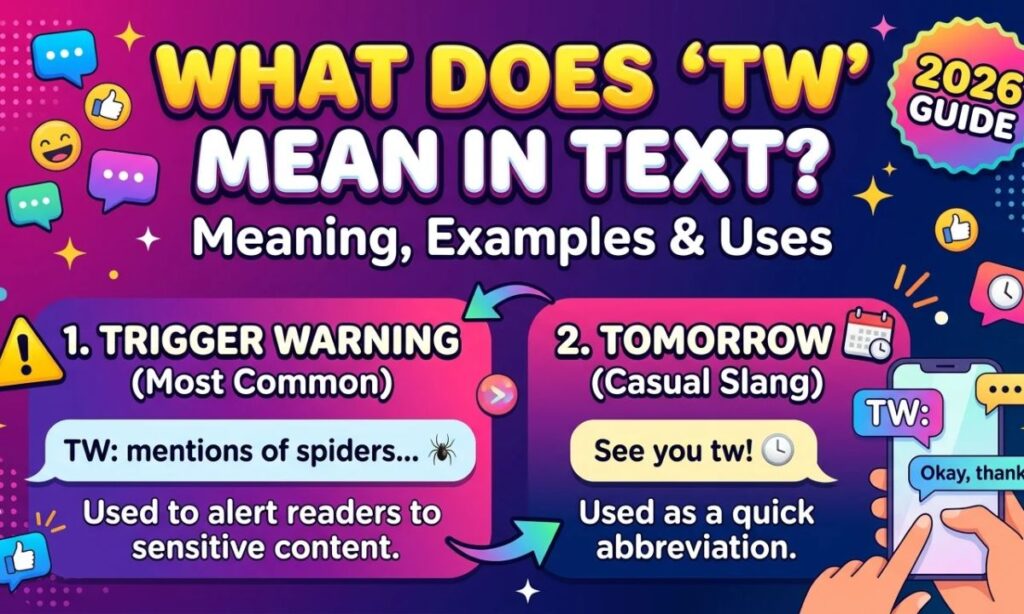
TW in text stands for “trigger warning.” It is a short heads-up that a message, post, or video contains sensitive content. People use it so others can decide whether they want to read or watch it.
You will see TW most often on social media, in group chats, and in online communities. It usually comes right before topics like violence, grief, or mental health struggles. It can also show up in a caption, a reply, or a text from a friend.
TW can have other meanings, too, depending on where you see it. This guide explains the main meaning first, then covers Snapchat, Instagram, and Gen Z slang. You will also find real examples, common mistakes, and tips for using TW the right way.
What Does TW Mean in Text?
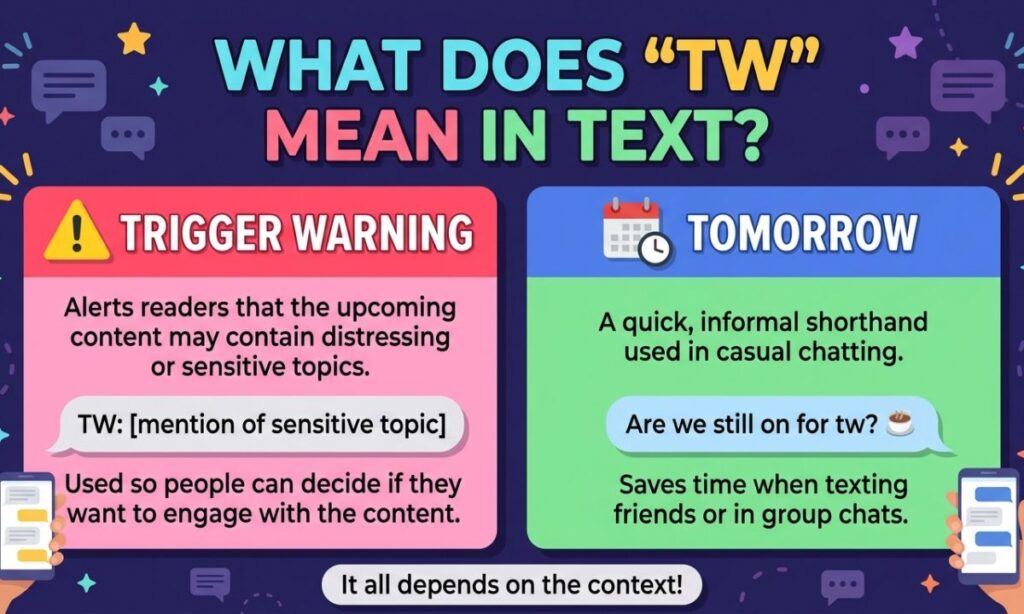
TW means “trigger warning” in almost every text or social media setting. It tells the reader that the content ahead may upset or distress some people. The goal is to give them a choice before they continue.
A “trigger” is something that brings back painful memories or strong emotional reactions. A trigger warning is a courtesy that lets people protect their well-being. It is often written in capital letters, like “TW: loss of a loved one.”
Simple Meaning (In Case You Still Have Questions)
Think of TW as a small caution sign. It says, “This next part may be heavy, so read at your own pace.” That is all it means.
It does not mean the content is bad or wrong. It simply tells people what is coming. Some readers skip the post, and others read it with care.
Where Is TW Used?
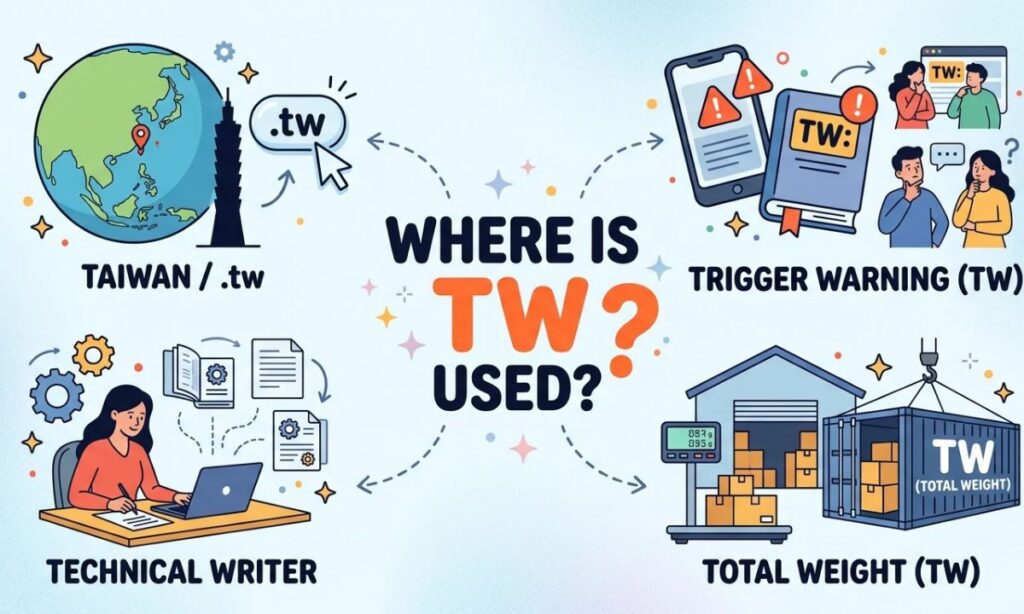
TW appears wherever people share personal stories, news, or creative work online. It is most common on platforms where posts spread quickly and reach strangers. You will also see it in private chats.
Social Media Platforms
TikTok, Instagram, X (formerly Twitter), Tumblr, and Reddit all use TW often. Creators add it to captions, on-screen text, or the first line of a post. Some platforms also have sensitive-content screens that work alongside it.
Text Messages and Group Chats
Friends sometimes use TW before sharing hard news. For example, someone might text, “TW: hospital stuff, my dad had a fall.” This gives the other person a moment to get ready.
Blogs, Forums, and Online Communities
Writers, fan fiction authors, and forum members use TW at the top of posts. It is common in book discussions and support groups. Many communities even require it by rule.
Why Do People Use TW?
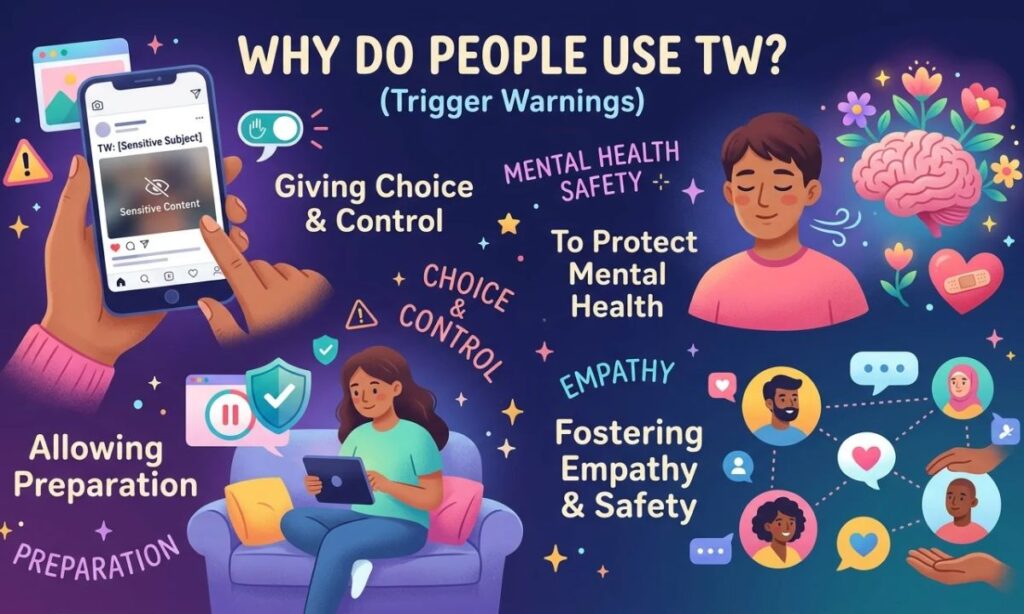
People use TW because it shows care and respect for others. It also helps build safer online spaces. Here are the main reasons.
To Protect Readers’ Mental Health
Some topics can cause real distress, especially for people who have lived through trauma. A short warning lets them step back or prepare. That small pause can make a big difference.
To Give People a Choice
Not everyone wants to see every topic at every moment. TW lets readers decide when and whether to engage. Having that control feels respectful.
To Follow Community Rules
Many groups and creators expect warnings on sensitive posts. Using TW helps you fit in and avoid complaints. It also shows that you understand the space you are posting in.
Real-Life Examples of TW in Action

Seeing TW in context makes the meaning easier to remember. Here are a few simple examples.
Social Media Caption Examples
- “TW: car accident footage. Skip if you need to.”
- “TW // discussion of eating disorders.”
- “TW: flashing lights in this video.”
Text Message Examples
- “TW: this is about my breakup. Is now a good time to talk?”
- “TW, long rant about work stress incoming.”
- “Sending a news link. TW: it mentions a house fire.”
Notice that the warning is short and names the topic. That makes it more useful than a vague “TW” alone.
TW vs Similar Terms — What’s the Difference?
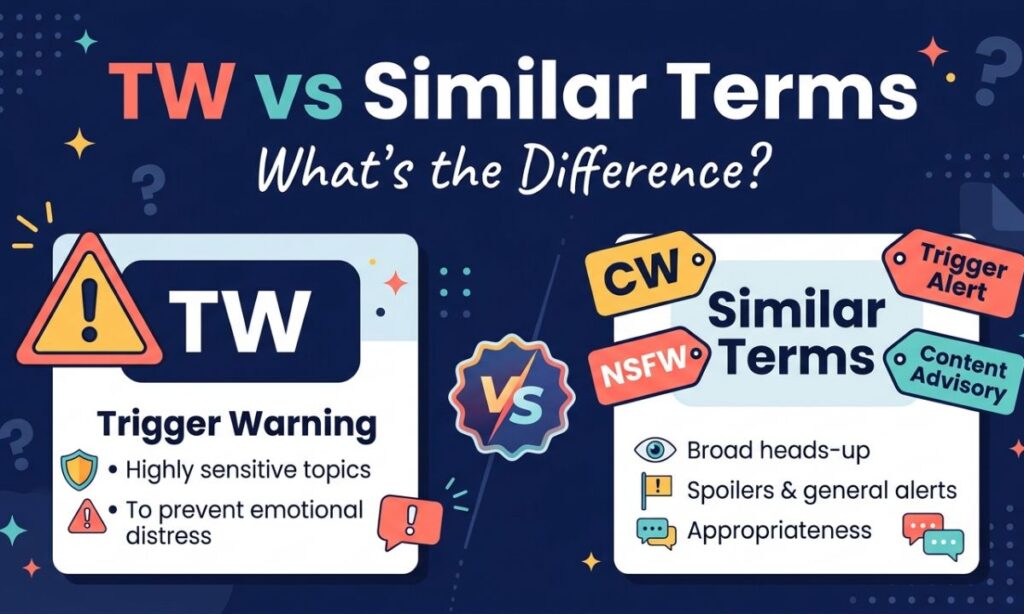
Several terms look alike, and people often mix them up. Knowing the difference helps you pick the right one.
TW vs CW (Content Warning)
CW stands for “content warning.” It is broader than TW and covers any content someone may want to avoid, like spiders, spoilers, or gore. Many people use the two terms interchangeably, but CW is often seen as the more general choice.
TW vs NSFW
NSFW means “not safe for work.” It refers to adult or explicit material that may be inappropriate in public or at a workplace. TW is about emotional sensitivity, while NSFW is about explicit content.
TW vs Spoiler Alert
A spoiler alert warns that a story’s plot will be revealed. It protects the fun of a show or book. TW protects emotional well-being instead.
When Should You Use TW?
Use TW when your message includes a topic that could be upsetting to some readers. It works best when you add it before the sensitive part, not after. Common examples include:
- Death, grief, or suicide
- Abuse or violence
- Illness or medical situations
- Eating disorders or self-harm
- Accidents, war, or disasters
After TW, name the topic briefly, such as “TW: death of a pet.” If you are unsure whether something needs a warning, adding one is usually the safer and kinder choice.
Common Misunderstandings About TW
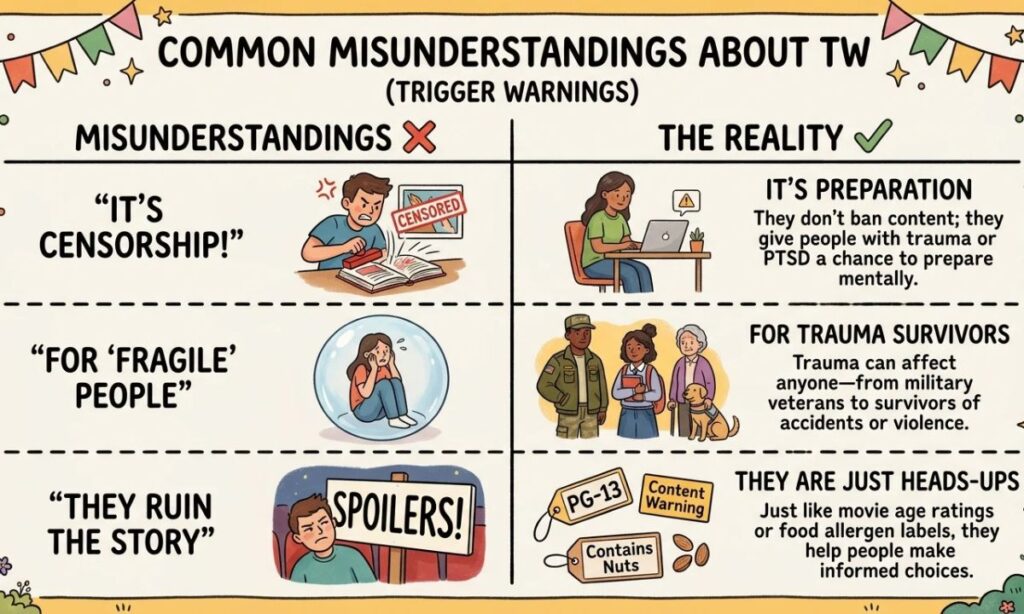
TW is often misunderstood, which leads to confusion online. Here are some myths worth clearing up.
“TW Means the Post Is Dangerous”
A TW does not mean the content is harmful or banned. It only signals that the topic may be sensitive. Many posts with a TW are thoughtful, helpful, or educational.
“TW Is Only for Extreme Topics”
Some people think it applies only to very serious events. In reality, people use it for many personal topics, such as a stressful breakup or a bad day at the hospital. What feels heavy differs from person to person.
“TW Always Means Trigger Warning”
Most of the time, yes. But in rare cases, TW can stand for something else, like “tweet” in older slang, “teamwork” in workplace chat, or “throwback.” Context usually makes the meaning clear.
Pro Tips for Using TW the Right Way
A good warning is simple, clear, and kind. These tips will help you use it well.
- Be specific. “TW: car crash” is more helpful than “TW: bad stuff.”
- Place it first. Put the warning at the start so people see it before the content.
- Keep it short. A few words are enough.
- Do not describe the details. The warning should name the topic, not repeat it.
- Respect others’ choices. If someone skips your post, that is the system working as intended.
What Does TW Mean on Snapchat?
On Snapchat, TW usually means “trigger warning” when it appears in a Story, caption, or chat. People use it before sharing a heavy topic or a sensitive video. It tells friends they can swipe past if they prefer.
In some cases, TW may be used casually between friends, like “TW: my terrible singing.” This is a joke and not a serious warning. Tone and context will help you tell the difference.
TW Meaning on Instagram
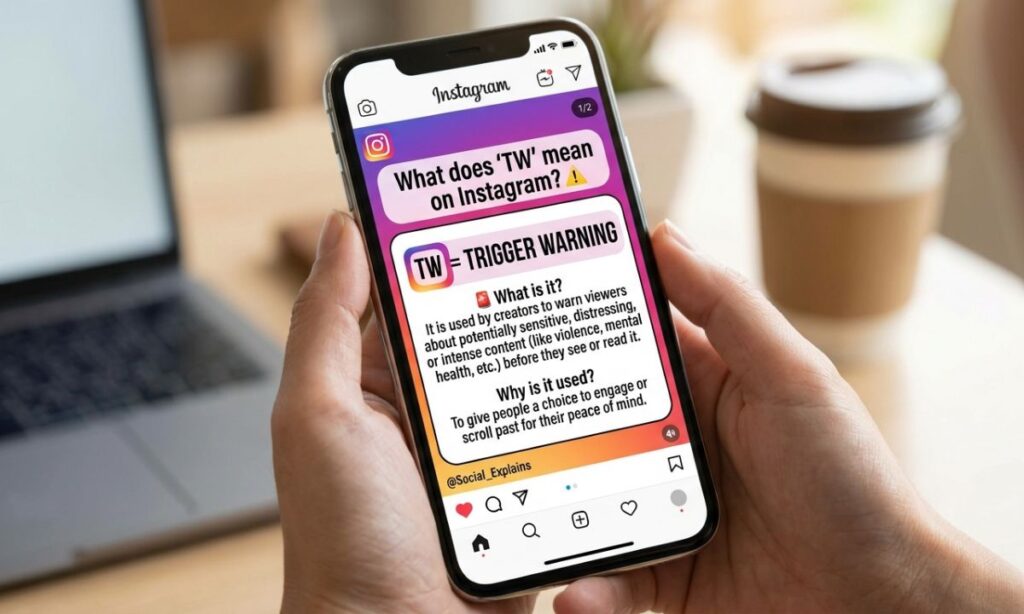
On Instagram, TW often appears in captions, Reels, Stories, and comments. Creators use it before posts about mental health, loss, or personal struggles. You may also see it in hashtags like #TW.
Instagram also offers its own sensitive-content controls, but a written TW adds a human touch. It lets followers know what to expect before they tap or scroll.
TW Meaning Gen Z
Among Gen Z, TW is part of everyday online language. It is used seriously for real sensitive topics and playfully for humor. A friend might write “TW: pineapple on pizza” as a joke.
This playful use can confuse people who are new to slang. A good rule is to look at the rest of the message. If the topic is truly heavy, the TW is real. If the tone is silly, it is probably a joke.
Frequently Asked Questions
What does TW stand for in text?
TW stands for “trigger warning.” It alerts readers that the content may include a sensitive or upsetting topic.
Is TW the same as CW?
They are very similar, but not identical. CW means “content warning” and covers a wider range of topics, while TW focuses on triggers tied to trauma or strong emotional reactions.
Is it rude to use TW?
No, it is generally seen as polite and considerate. Most people appreciate the heads-up, especially on public posts.
Can TW mean something else?
Yes, but it is rare. Depending on context, it can mean “teamwork” or an older shorthand for “tweet,” but “trigger warning” is by far the most common meaning.
How do I write a trigger warning properly?
Type “TW” followed by a colon and a short description of the topic, such as “TW: loss of a parent.” Place it before the sensitive content so readers see it first.
Do I need to use TW in every post?
No. Use it only when your post includes topics that may upset others. Everyday content does not need one.
Why do some people dislike TW?
Some feel it is overused or unnecessary, while others worry it makes content seem scarier than it is. Still, many people value it as a simple way to show care.
Last Word
TW means “trigger warning,” a short note that protects readers from unexpected distress. It is a small habit that shows respect and care. Whether you see it on Snapchat, Instagram, or in a group chat, the idea stays the same.
Now that you know how it works, you can use it with confidence. Keep it clear, name the topic, and place it before the sensitive part. A few extra words can make someone’s day easier.
Always read the context before you decide what a TW means. Most of the time it is serious, but sometimes it is just a joke. When in doubt, choose kindness, and add the warning.